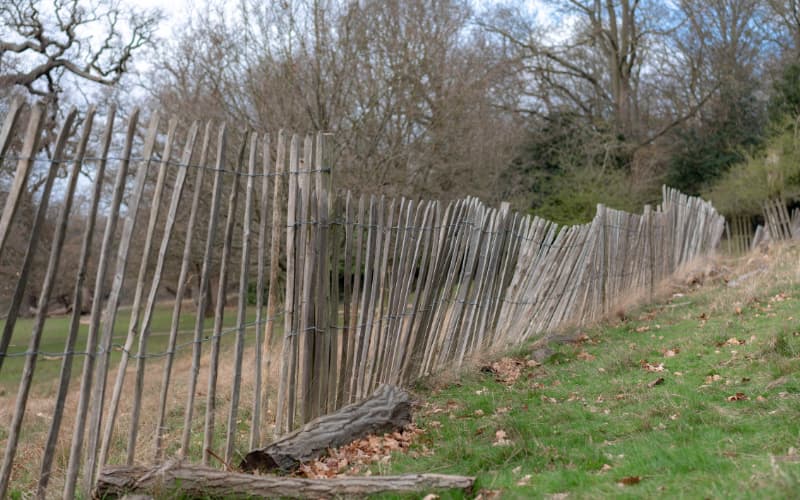
Why Is Your Garden Fence Leaning After Strong Winds?
A garden fence that begins leaning after strong winds is often showing that part of its supporting structure has weakened. Although the movement may appear to have happened suddenly, windy weather frequently exposes an existing problem rather than creating the entire issue in a single event. Posts may have deteriorated, ground support may have loosened, fixings may no longer be holding securely, or repeated movement may have gradually weakened the fence.
For homeowners in Maidstone, Kent, identifying why a fence has started leaning is important before deciding how it should be repaired. Simply pushing the fence upright may improve its appearance temporarily, but unless the underlying weakness is addressed, further wind can cause the same movement again. Professional fence repair focuses on restoring adequate support rather than treating the lean as a purely cosmetic problem.
What Causes a Garden Fence to Lean After Strong Winds?
Fence panels create a relatively large surface for wind to push against. That pressure is transferred through the panels and rails into the fence posts and ultimately the ground supporting them.
A well-installed and serviceable fence is designed to withstand normal exposure, but weaknesses can develop over time. When stronger winds arrive, the additional force may cause already vulnerable posts, fixings or sections of fencing to move noticeably.
Understanding which component has failed is therefore the first step towards an effective repair.
Weak Fence Posts Are a Common Cause
Fence posts provide the main structural support for most garden fencing.
If a post has weakened, the fence may begin moving around that point whenever it is exposed to wind. Eventually, the post may no longer be capable of keeping the adjoining sections upright.
A leaning fence should therefore be assessed at post level rather than concentrating solely on the panels that appear out of alignment.
Timber Posts Can Deteriorate Near Ground Level
One particularly important area to inspect is where a timber fence post enters the ground.
This part of the post is exposed to conditions that differ from the more visible timber above. Deterioration can develop around or below ground level while the upper section continues to look relatively sound.
When strong winds place additional pressure on the fence, the weakened lower section may begin flexing or fail to provide sufficient support.
A Post Can Look Sound While Being Weak Below Ground
Visual inspection from above does not always reveal the complete condition of a fence post.
A homeowner may see apparently solid timber while movement is actually occurring within the ground or at the base of the post. This explains why some fences begin leaning even though there is no obvious broken component visible.
Professional inspection can help establish whether the problem lies with the post itself or the way it is supported.
Ground Support Can Become Less Effective
The stability of a fence depends not only on the post but also on how securely that post is held in position.
If the surrounding ground or post foundation has become less stable, repeated wind pressure can gradually create movement. Once a post begins shifting, each subsequent period of windy weather can make the lean more pronounced.
Restoring the fence may therefore require attention to its support rather than simply adjusting the visible fencing above.
Loose Posts Can Affect Several Panels
One weak post can influence more than one section of fencing.
Because adjoining panels or rails connect to the same support, movement at a single post may cause sections on either side to lean or become misaligned. This can make the problem appear more widespread than it actually is.
Identifying the main point of weakness can sometimes allow the repair to remain relatively localised.
Wind Pressure Can Expose Ageing Fixings
Posts are not the only parts of a fence subjected to wind loading.
Fixings connecting panels, rails and other components also experience repeated movement. If they have loosened or deteriorated, stronger winds may cause parts of the fence to move independently rather than remaining firmly connected.
A thorough assessment should therefore consider connections as well as the main supports.
Damaged Rails Can Reduce Structural Support
Many timber fences use horizontal rails to connect sections and support individual boards or other components.
If a rail has split, deteriorated or pulled away from a post, the fence may lose some of its rigidity. Wind can then create greater movement across that section.
Repairing or replacing the affected rail may be necessary to restore proper support.
Heavy Fence Panels Place Greater Demands on Weak Supports
A fence panel presents a broad surface to the wind.
When strong gusts push against it, the resulting force must be resisted by the posts and connections. If these supporting components have already weakened, the panel effectively acts as a large surface transferring additional pressure into them.
This is why a fence can remain apparently upright during calmer conditions but begin leaning noticeably after windy weather.
Dense Fencing Can Experience Significant Wind Loading
The design of the fence can influence how it responds to windy conditions.
More solid fencing allows relatively little air to pass through, meaning wind pressure is transferred across a substantial part of the surface. This does not mean that solid fencing is inherently unsuitable, but it does make dependable posts and appropriate installation particularly important.
Where a fence repeatedly moves in windy conditions, the entire structure should be considered rather than continually straightening individual panels.
One Leaning Section Does Not Always Mean the Whole Fence Needs Replacing
A visible lean can look dramatic, but it does not automatically mean that every part of the fence has failed.
If most posts, panels and rails remain in suitable condition, the problem may be concentrated around one or two weakened supports. Targeted fence repair can then focus on restoring those sections while retaining serviceable components.
Professional assessment helps distinguish between localised failure and more general deterioration.
Several Leaning Sections May Indicate a Wider Problem
The situation is different when numerous posts or panels have moved.
If a long section of fencing leans in the same direction, several supporting points may have weakened. Alternatively, movement in one area may have placed additional strain on neighbouring sections.
In this situation, examining the fence as a connected structure is more useful than treating every leaning panel as a completely separate problem.
Why Pushing the Fence Upright Is Not a Repair
A leaning fence can sometimes be physically pushed back towards its original position.
However, this does not explain why it moved in the first place. If a post is deteriorated or inadequately supported, returning the fence to vertical does nothing to restore the missing strength.
Without addressing the cause, the fence may begin leaning again during the next period of strong wind.
Temporary Supports Do Not Address the Underlying Weakness
Bracing can sometimes prevent an unstable section from moving further for a short period, but it should not be confused with resolving the structural problem.
The original posts, rails and connections still need to be assessed. A lasting repair should restore appropriate support to the fencing rather than relying indefinitely on additional temporary measures.
This is particularly important where movement has already become noticeable.
A Small Lean Can Be an Early Warning Sign
Fence movement does not need to be severe before it deserves attention.
A slight change in angle can indicate that a post is beginning to move or that another supporting component has weakened. At this stage, the rest of the fence may still remain relatively well aligned.
Investigating the problem early can help establish whether a localised repair can prevent further movement.
Repeated Movement Can Affect Surrounding Sections
Once part of a fence becomes loose, movement can place additional stress on neighbouring components.
A post that shifts backwards and forwards can pull against rails and fixings. Those connections may then begin loosening, allowing movement to spread further along the fence.
Addressing the initial weakness helps protect sections that remain serviceable.
Gates Can Add Different Loads to Fence Posts
Where a gate is incorporated into a run of fencing, the supporting posts have an additional role.
They need to support the gate and maintain alignment while also dealing with normal environmental exposure. If a nearby post moves, the gate may become difficult to open, close or align correctly.
Changes in gate operation following windy weather can therefore provide another indication that supporting posts should be inspected.
Look for Movement Rather Than Damage Alone
A fence does not need to contain visibly broken timber to have a structural problem.
Movement itself is useful evidence. Posts that rock when the fence is gently moved, widening gaps between components or sections that no longer align can all indicate that support has changed.
Recognising these signs can help identify problems before a panel or post fails more noticeably.
Professional Fence Repair Starts With Finding the Weak Point
The most effective repair depends on identifying which component is responsible for the movement.
This might involve a deteriorated post, inadequate support around a post, a damaged rail, failed fixings or a combination of several issues. Once the weak point has been established, the work can be directed towards restoring structural stability.
This is preferable to replacing components simply because they happen to be close to the visible lean.
Repairing Posts Can Preserve Serviceable Fence Panels
Where the panels remain in satisfactory condition, restoring or replacing failed supports may allow them to continue being used.
This proportionate approach avoids assuming that an entire fence needs renewal because one structural element has deteriorated. Equally, panels that are themselves damaged should be considered as part of the overall assessment.
The objective is to determine which components remain serviceable and which genuinely require attention.
When Might More Extensive Fencing Work Be Appropriate?
Localised repairs are not suitable for every leaning fence.
If numerous posts have deteriorated, rails are extensively weakened or several sections have reached a similar condition, repairing one isolated point may not address the wider problem. More comprehensive work may then provide a more appropriate solution.
The extent of the work should follow the condition of the fence rather than simply its age or appearance.
Good Installation Helps a Fence Resist Future Movement
Repairing wind damage is not only about returning a fence to an upright position.
Posts need suitable support, components should be securely connected and the finished structure should work as a complete system. Attention to these details helps the fence manage the forces placed on it during everyday weather conditions.
Correct installation is therefore fundamental to the long-term stability of repaired or replacement fencing.
Why Professional Assessment Adds Value
It can be difficult to determine why a fence is leaning simply by looking at the panels.
At Fast Fix Fencing Maidstone, we assess the affected fencing to establish where movement is occurring and which components are contributing to the problem. For properties in Maidstone, Kent, this allows repairs to concentrate on the actual weakness rather than simply improving the fence’s appearance temporarily.
Where suitable components can remain in place, the work can be focused on the sections that genuinely require attention.
Acting Early Can Help Keep the Problem Contained
A slightly loose post may initially affect only one small part of a garden boundary.
If it continues moving during windy conditions, however, adjoining rails, fixings and panels can experience additional strain. What began as one unstable support can therefore become a larger fencing problem.
Arranging an assessment when movement first becomes apparent can help prevent unnecessary deterioration of surrounding sections.
Conclusion
A garden fence that leans after strong winds is often showing that its posts, ground support, rails or fixings have weakened. Strong weather may be the event that makes the problem obvious, but the underlying deterioration can have developed gradually beforehand.
The correct repair depends on identifying where the fence has lost its support. In some cases, replacing or stabilising an individual post may be sufficient to retain the surrounding fencing. Where several sections have deteriorated, more extensive work may be appropriate.
If your garden fence has started leaning, moving or becoming unstable in Maidstone, Kent, contact Fast Fix Fencing Maidstone. We can assess the affected sections, identify the cause of the movement and recommend appropriate fence repairs to restore a secure, well-supported boundary.
Call us on: 01622 232 780
Click here to find out more about Fast Fix Fencing Maidstone
Click here to complete our contact form and see how we can help with your fencing needs.